
Two-panel Moon

We hosted a small group of 16 visitors during the July 16 Open Night but enjoyed the event very much; a group of that size is in the not-too-large and not-too-small range that affords easy conversation and sharing of the observatory experience. I the summertime we usually feature Earth’s Moon. Between summer’s late sunsets, and Daylight Saving Time extending twilight by an hour, the Moon reliably shows up even before the sky is dark! Saturday’s experience was no exception.

We viewed the Moon through the Cooley Telescope’s remarkable optics and were rewarded with exciting detail. Moving along as the sky darkened, we turned our attention to Saturn: the planet’s subtle color and distinctive ring system showed good detail, very good at times. We briefly viewed Mars but the Red Planet is rapidly parting company with Earth and has grown small in the telescope’s eyepiece.

Yes, the “star” of the night was Luna and, once the last visitors departed, we made a few images of our nearest neighbor in space to help illustrate why we love sharing the view!

Stephens Memorial Observatory of Hiram College will be open for public observing Saturday, July 16, from 9:30 to 11:00 PM. Beautiful ringed Saturn, Earth’s amazing Moon, and hopefully the M4 star cluster in Scorpius will be the featured objects. Mars is rapidly distancing itself from us and will likely be uninteresting in our telescope though we may take a look anyway.
Sky conditions, of course, will determine what we see and even whether we can see anything at all. We will hope for clear skies because Saturn still presents its ring system at an excellent tilt for viewing!
No reservations are required and there is no admission fee for observatory public nights. Cloudy skies at the starting time cancel the event and, in that case, the observatory will not open.
The Observatory is located on Wakefield Road (Rt. 82) less than a quarter of a mile west of Route 700 in Hiram.
There is no parking at the Observatory. Visitors may park on permissible side streets near the Post Office, a short distance east of the observatory. DO NOT park on nearby Peckham Avenue; parking is prohibited there and violators may be ticketed!

NASA’s Juno mission, launched nearly five years ago, will soon reach its final destination: the most massive planet in our solar system, Jupiter. On the evening of July 4, at roughly 9 PM PDT (12 AM EDT, July 5), the spacecraft will complete a burn of its main engine, placing it in orbit around the king of planets.
During Juno’s orbit-insertion phase, or JOI, the spacecraft will perform a series of steps in preparation for a main engine burn that will guide it into orbit. At 9:16 PM EDT (July 4), Juno will begin to turn slowly away from the sun and toward its orbit-insertion attitude. Then 72 minutes later, it will make a faster turn into the orbit-insertion attitude.
At 10:41 PM EDT, Juno switches to its low-gain antenna. Fine-tune adjustments are then made to the spacecraft’s attitude. Twenty-two minutes before the main engine burn, at 10:56 PM, the spacecraft spins up from two to five revolutions per minute (RPM) to help stabilize it for the orbit insertion burn.
At 11:18 PM, Juno’s 35-minute main-engine burn will begin. This will slow it enough to be captured by the giant planet’s gravity. The burn will impart a mean change in velocity of 1,212 MPH (542 meters a second) on the spacecraft. It is performed in view of Earth, allowing its progress to be monitored by the mission teams at NASA’s Jet Propulsion Laboratory in Pasadena, California, and Lockheed Martin Space Systems in Denver, via signal reception by Deep Space Network (DSN) antennas in Goldstone, California, and Canberra, Australia.
After the main engine burn early July 5 (Eastern Daylight Time), Juno will be in orbit around Jupiter. The spacecraft will spin down from five to two RPM, turn back toward the sun, and ultimately transmit telemetry via its high-gain antenna. At Jupiter’s current distance of 536.9 million miles from Earth, radio signals will take about 48 minutes to reach the DSN.
Juno starts its tour of Jupiter in a 53.5-day orbit. The spacecraft saves fuel by executing a burn that places it in a capture orbit with a 53.5-day orbit instead of going directly for the 14-day orbit that will occur during the mission’s primary science collection period. The 14-day science orbit phase will begin after the final burn of the mission for Juno’s main engine on October 19.
JPL manages the Juno mission for NASA. The mission’s principal investigator is Scott Bolton of Southwest Research Institute in San Antonio. The mission is part of NASA’s New Frontiers Program, managed at the agency’s Marshall Space Flight Center in Huntsville, Alabama, for NASA’s Science Mission Directorate. Lockheed Martin Space Systems in Denver built the spacecraft.
Learn more about the June mission, and get an up-to-date schedule of events, at:
Mission Trailer Video: Secrets lie deep within Jupiter, shrouded in the solar system’s strongest magnetic field and most lethal radiation belts. On July 4, 2016, NASA’s Juno spacecraft will plunge into uncharted territory, entering orbit around the gas giant and passing closer than any spacecraft before. Juno will see Jupiter for what it really is, but first it must pass the trial of orbit insertion.
For much more on NASA’s Juno mission, click here!

The NASA All-Sky Fireball Network camera at Hiram College captured the passage of a very bright meteor over Hiram on June 11 at 10:17 PM. The extremely bright meteor or “fireball” was also recorded by the NASA camera located on the campus of Oberlin College. Fireballs are meteors that flare brighter than the planet Venus shines. It is likely the glowing streak seen here was caused by a bit of material, possibly the size of a tiny pebble, vaporizing as it crashed into Earth’s upper atmosphere at extreme speed. A witness to the event wrote, “I never saw anything like this one… It was beautiful.”
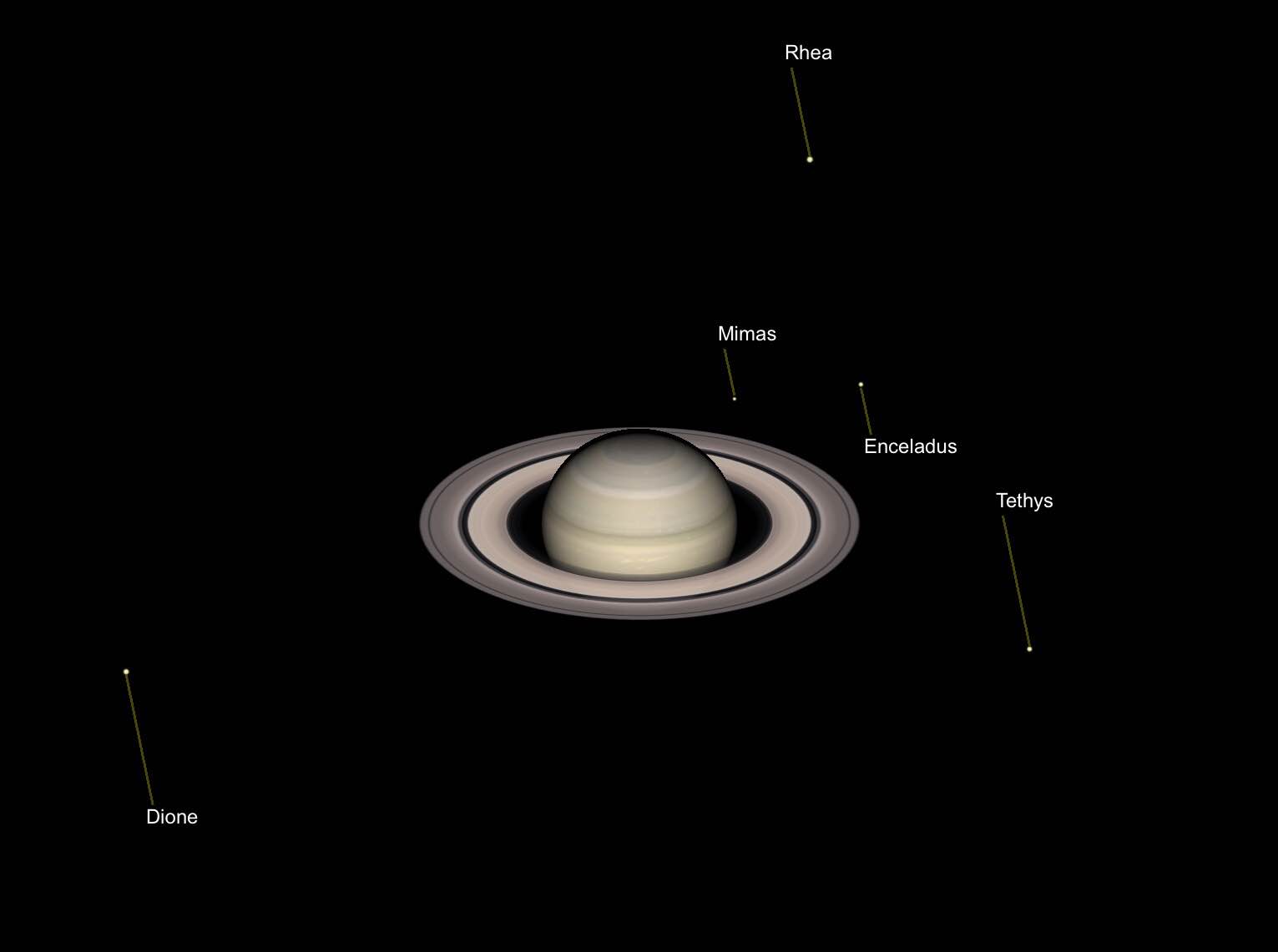
Stephens Memorial Observatory of Hiram College will be open for public observing Saturday, June 18, from 9:30 to 11:00 PM.
Beautiful ringed Saturn, planet Mars, Earth’s amazing Moon, and (if the Moon doesn’t interfere) the Ring Nebula will be the featured objects.
UPDATE: Due to current and predicted overcast sky conditions and the high probability of inclement weather, tonight’s planned Open Night has been CANCELED. Let’s hope for much better conditions the night of June 18 when we hope to see Saturn and Mars, as well as other amazing things! – 5/14/2016 @ 4:30 PM
Stephens Memorial Observatory of Hiram College is to be open for public observing Saturday, May 14, from 9:00 to 11:00 PM. As is so often the case, however, predicted weather conditions for this event do not look good; cloudy skies with rain chances are expected. If the sky is very cloudy, the open night event will be canceled and the observatory will not be open. Check back for updates and a final decision and announcement to be made Saturday.
The always-impressive First Quarter Moon will be featured as well as brilliant planet Jupiter and its moons. Given time and visibility, M13: the Great Globular Cluster of constellation Hercules, will also be viewed.
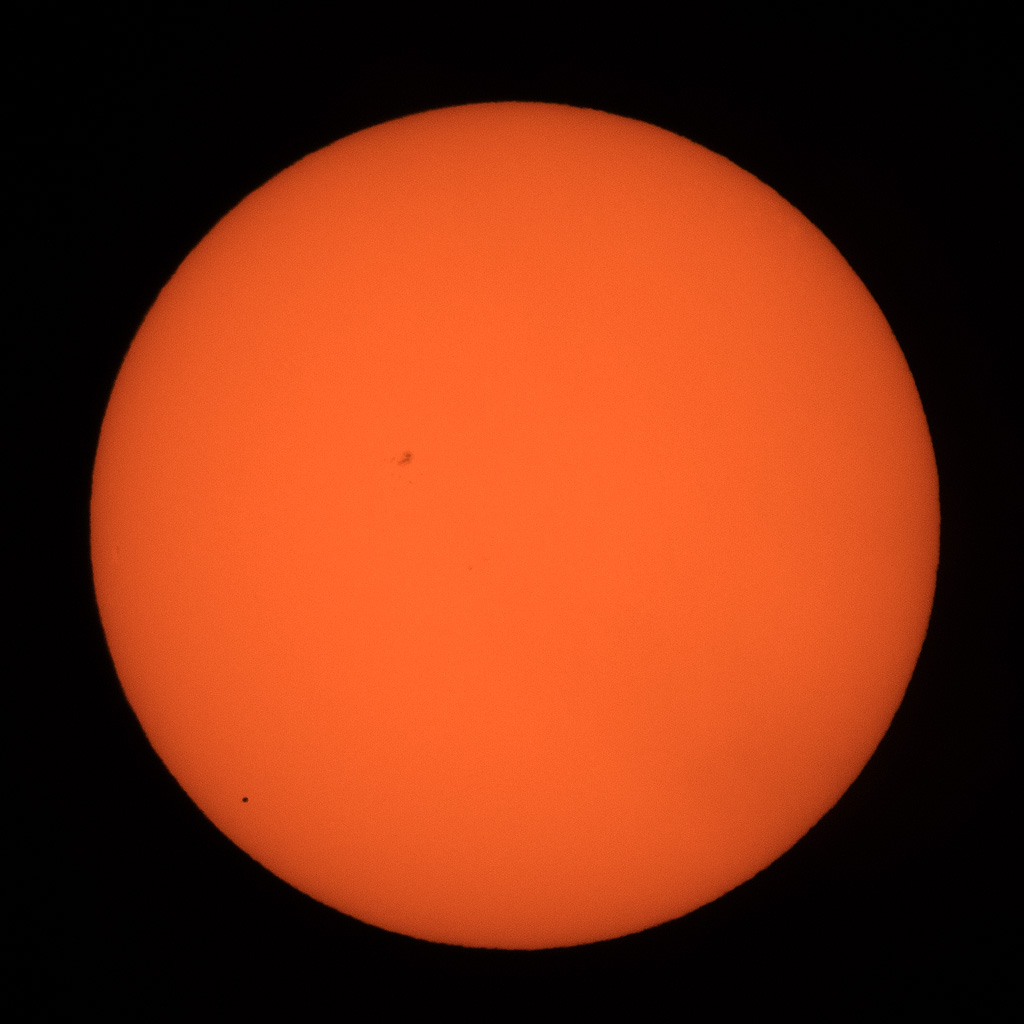
Our Solar System doesn’t care about the local weather. When something rare and interesting like today’s transit of Mercury across the solar disk takes place, it happens and there are no “rain checks.” And so it was this morning when the day dawned clear to partly-cloudy allowing us to glimpse the beginning of Mercury’s trek only to have the show stopped by rapidly encroaching clouds progressing to solid overcast!

At the predicted hour Mercury appeared as a tiny dot, silhouetted in the lower left-hand quadrant of the Sun’s bright disk. Using special protective filters, observers on the ground watched as the small dot slowly moved inward from Sol’s limb. Here in Northern Ohio, transit watchers were treated to the beginning of the show. Much of the nation missed out entirely, cloud cover already in place at dawn!

NASA’s Solar Dynamics Observatory, a spacecraft, is unaffected by Earth’s pesky atmospherics and its technology produces some very dramatic images. One of my favorites shows Mercury about to cross between the satellite (us) and the Sun’s glowing photosphere; the planet has the active solar atmosphere as backdrop. Planet Mercury is 3,030 miles in diameter, not much bigger than Earth’s Moon, and looked every bit as tiny as it is compared with our nearest star!

Today’s transit of Mercury took place over several hours. For us in Northern Ohio, the transit began at about 7:12 AM Eastern Daylight Time with the Sun barely up. Midpoint of Mercury’s passage was at 10:57 AM, and the transit ended at 2:42 PM. Because of the orbital inclinations of the inner planets, the alignment needed to produce a transit of Mercury happens only about 13 times per century making even a glimpse of the event something special. After today’s, the next transits of Mercury will take place in November 2019, November 2032, and November 2049.
At least we won’t have to wait for so long as we must for the next transit of Venus — that happens in December 2117.
On Monday, May 9 solar observers in North America will be able to see the silhouette of planet Mercury as it passes between Earth and our Sun. The event, called a transit, is relatively rare — though not so rare as a transit of Venus — and may cause interest in viewing the Sun. WARNING: Looking at the Sun, especially through optical instruments, requires extreme caution! Permanent vision damage can result if proper precautions are not taken! Click here for a good article on safely observing the Sun.
At present we DO NOT plan to open Stephens Observatory for the transit but if plans change, the announcement will be made here — check back later. If conditions are clear, we hope to post images made via telescope at a remote location.
Tiny planet Mercury will appear as a correspondingly tiny black dot against the Sun’s brilliant disk. If any sunspots are present on Sol’s face, compare them with Mercury: the planet will be distinctly round and noticeably darker than sunspots, and from minute to minute it will move — sunspot motion takes days!
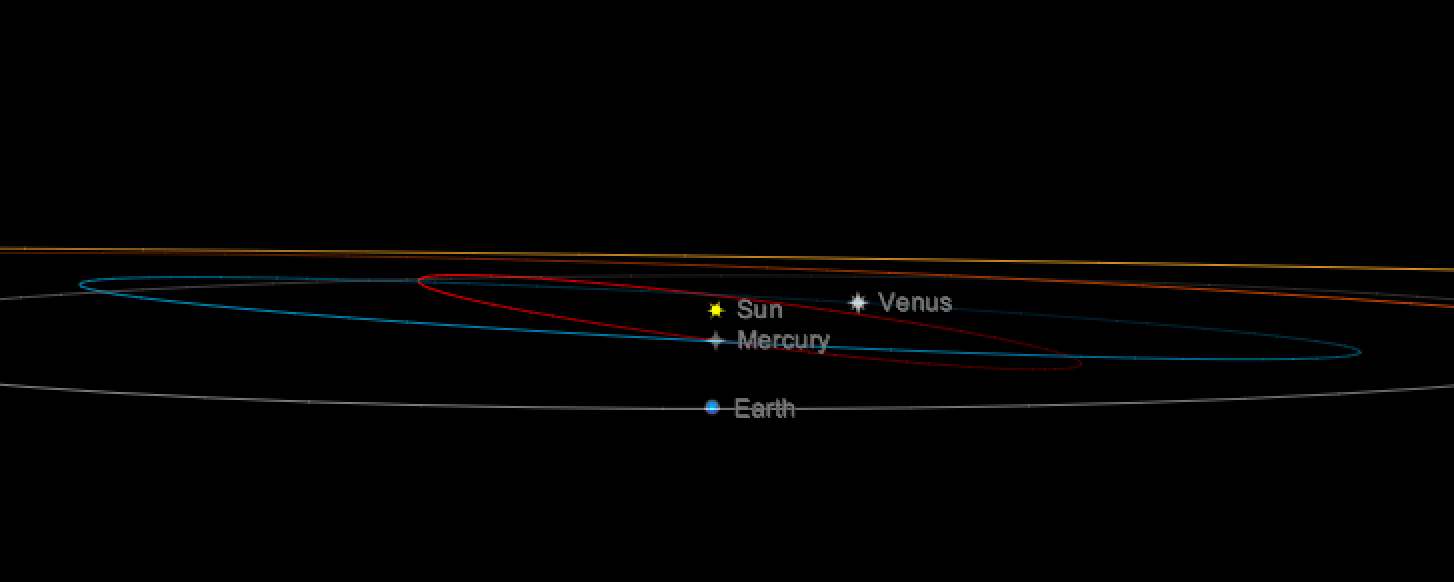
Viewed from Earth, transits occur when one of the inner planets crosses the line of sight between our world and the Sun; only Venus and Mercury are ever able to do that. A transit, then, is a bit like a solar eclipse only viewed at a greater distance and blocking only a small amount of the Sun’s light.
Transits would occur more often but for the fact that the orbits of Mercury and Venus are “tipped” so that they do not align along the same plane as Earth’s path. Only when the planets are in the right position where the line of sight passes straight through to the Sun do we see transits and with Mercury, that happens only about 13 times per century. After May 9, the next transits of Mercury will take place in November 2019, November 2032, and November 2049. The most recent transit of Venus took place in June 2012 and will not be seen again until December 2117.
Monday’s transit of Mercury will take place over several hours. For us in Northern Ohio, the transit begins at about 7:12 AM Eastern Daylight Time with the Sun low in the east. Midpoint of Mercury’s passage will be at 10:57 AM, and the transit ends at 2:42 PM.
Cloudy skies? Don’t have proper gear to view the Sun? Fret not! There will be “live” webcasts of the event from various sources during Mercury’s passage. Use your favorite web search engine to find good sources and check for a planned broadcast via NASA TV. NASA will stream a live program on NASA TV and the agency’s Facebook page from 10:30 to 11:30 AM — an informal roundtable during which experts representing planetary, heliophysics and astrophysics will discuss the science behind the Mercury transit. Viewers can ask questions via Facebook and Twitter using #AskNASA.
We hope to post a few links here later.
 Stephens Memorial Observatory