Hey! That’s my fireball!

Fireball image captured at 11:36 PM EDT, August 11, 2020 by Hiram’s NASA All-Sky Fireball Network camera. The time stamp in the camera image reads 03:36 UTC — Coordinated Universal Time — which converts to 11:36 PM EDT. Credit: NASA


by James Guilford

Hey! That’s my fireball!!

I had stepped outdoors to check the sky (hoping to see at least one Perseid Meteor) and witnessed a fireball  at 11:36 PM; it was captured by the NASA All-Sky Fireball Network camera system hosted by Hiram College. That was the first time I had spotted a meteor that was also captured by the automated camera. The “shooting star” is not very impressive in the picture but it was a beauty by eye, glowing brightly and leaving a long “smoke trail” as it traveled from south to north.

Below is a summary of the data the NASA system was able to derive from Hiram, Oberlin College, and Allegheny Observatory imagery. Rather than a Perseids meteor, it was classified as an Alpha Capricornids meteor — that shower peaked in late July.
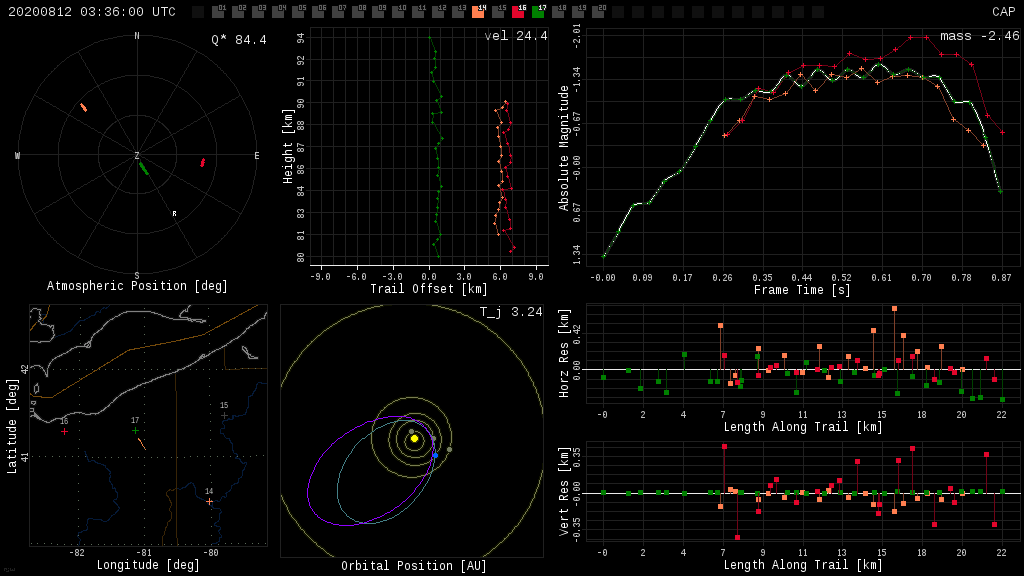
Data Summary for the fireball recorded at 11:36 PM EDT, August 11, 2020. Credit: NASA


If you are interested in NASA’s All-Sky Fireball Network, here’s a link to their website. Meteor data are updated daily with image captures and event summaries. Hiram’s is one of 17 all-sky cameras located in the continental U.S. https://fireballs.ndc.nasa.gov.

On August 13, 2013, Hiram College became the host for one of NASA’s All-Sky Camera Fireball Network stations, Oberlin College and Allegheny Observatory joining with us. The automated camera system watches the sky every night for exceptionally-bright meteors called fireballs.

James Guilford operates Stephens Memorial Observatory for the Physics Department of Hiram College.


Perseids 2020: Dependable shower, dubious weather

A fireball meteor streaks across the sky north of Hiram at 3:38 AM, August 8, 2020. The large white “blob” in this image is the waning Gibbous Moon. Credit: NASA All-Sky Fireball Network/Hiram College Camera

It’s Perseids season!

The annual Perseid Meteor Shower peaks from August 11 to 13, the event many consider to be the best meteor shower of the year, thanks to frequent meteors streaking across the sky and comfortable nighttime temperatures. This year, skywatchers can expect to see between 50 and 75 meteors an hour under dark skies, or about one meteor every minute. The meteors are bits of material strewn across Earth’s path in space by Comet 109P/Swift-Tuttle. The bits of dust and grit glow brightly as they burn up while entering Earth’s atmosphere at about 37 miles per second.

This year, for those who venture out before midnight on the peak date(s), Earth’s Moon won’t interfere. Dedicated meteor spotters — those who observe in the wee hours between midnight and dawn — may curse as Moon rises and brightens the sky, making faint meteors harder to see. There is another problem, however, much closer to home: the weather.


2020 Perseids Viewing Forecast for the continental United States. Credit: Accuweather


The weather forecast calls for mostly cloudy skies Tuesday and Wednesday nights. Of course.

Do not abandon hope.

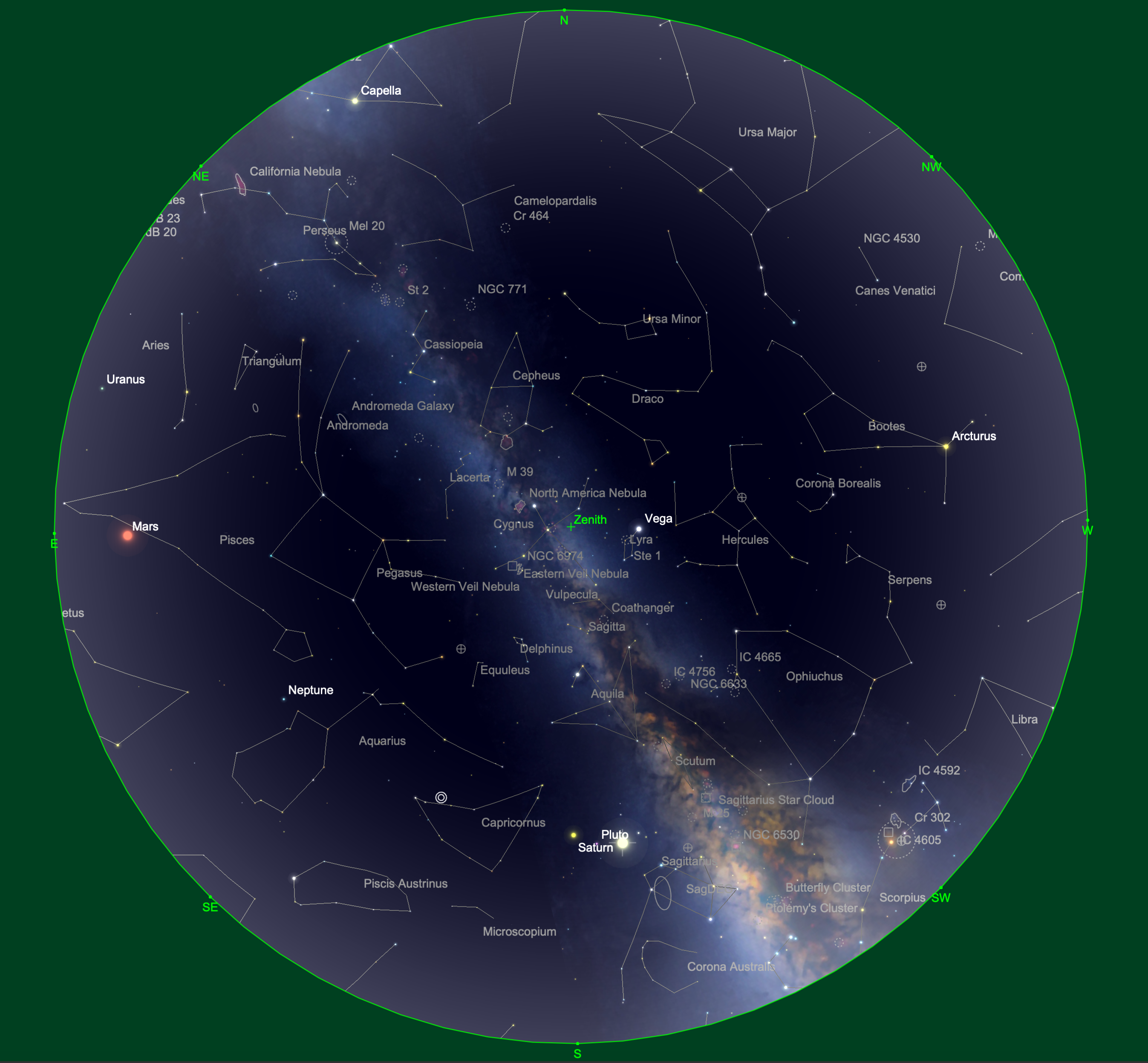
The nights preceding and following the shower’s peak see occasional meteors from the Perseid and Alpha Capricornid showers and include fireballs (very bright meteors) from both. When the sky’s clear, go out and enjoy the mild nights that may include “shooting stars.” After twilight fades, find a dark spot, spread out a blanket, or untangle that deck lounge chair, apply a little mosquito repellent and look up. As your eyes grow used to the dark you’ll see more and more stars, planets Jupiter and Saturn gracing the southern sky, and with decently dark sky, spy the soft clouds of our own Milky Way galaxy. You’ll probably see a satellite or two, too.


Our Night Sky: August 11, 2020, 11:59 PM. Note: The bright dot that appears to be labeled Pluto is actually Jupiter! Pluto is the tiny purple speck next to it and you won’t be able to see Pluto. Credit: SkySafari — CLICK FOR FULL-SIZE IMAGE